Esther, you do a bit of everything. On top of being an esteemed copywriter, you do project management, client communications, and head of conservation. What would you say is your favourite aspect of your job?
It’s the variety. No two days look the same, and I genuinely enjoy switching between writing, client relationships, strategy, and conservation work. At the heart of it all is storytelling. Whether I’m helping a brand find its voice or writing about marine conservation, it’s still about connecting people to something meaningful. I also love solving problems like finding the story or message that makes people stop, think, and act.
What advice do you have for an aspiring copywriter? What would you say was your biggest motivation in pursuing a career in copywriting?
Read constantly and stay curious. Great copywriters aren’t just good writers. They’re good observers, and they ask questions. Learn how people think, because the best copy isn’t about clever words; it’s about making someone feel understood.
For me, copywriting has never just been about selling a product or service. Whether I’m showcasing a beautiful destination, explaining a specialised viticulture technique, writing about shark conservation or sharing the story of my daughter Alba’s battle with leukaemia and search for a stem cell donor, the goal is always the same: to create a genuine human connection that inspires someone to feel something and, hopefully, to act.
The past few months have reinforced that more than ever. I’ve seen how honest, authentic storytelling can reach people across the world, mobilise communities, encourage thousands of potential stem cell donors to register, and ultimately help save lives. It’s a reminder that words carry enormous responsibility and incredible power.
So my biggest advice is this: never write to impress people. Write to connect with them. If you can make someone stop, care, and remember how your words made them feel, you’ve already become a better copywriter.
Being an outdoor enthusiast, how would you say you balance your passion for nature with an ‘office’ job?
I don’t really separate the two. Working in conservation means nature is part of my job, even when I’m sitting behind a computer. Whenever I can, I get outside, whether it’s on our boat, diving, hiking, beach clean-ups, or even simply walking along the shoreline or planting veggies in the garden. Those moments recharge me creatively and remind me why the work matters in the first place.
How did you find your passion for copywriting?
I’ve always loved writing. Even as a child, I was the one filling notebooks with stories and poems and asking far too many questions. Although it wasn’t my immediate pursuit, after studying media and communications, copywriting felt like the perfect combination of creativity and psychology. It’s fascinating that the right words can completely change how people connect with a brand or an idea. Or even an animal they once feared… of course, I had to get a shark conservation plug in here!
Even though you are a local in South Africa, your first home is Scotland, so if you could bring one Scottish tradition or food to the office (or the whole company), what would it be and why?
Definitely a proper ceilidh. It’s a traditional Scottish gathering with music, dancing, and a lot of laughter. You don’t even have to know the steps. You just jump in, follow the caller (MC)’s steps, and somehow everyone ends up having a brilliant time. It feels like the perfect way to build a team after a wee wine!
Although getting everyone on the delicious haggis bandwagon would be the ultimate win!
Most of us know your immense passion for the ocean. What first sparked your love for the ocean, and how does it show up in your everyday life?
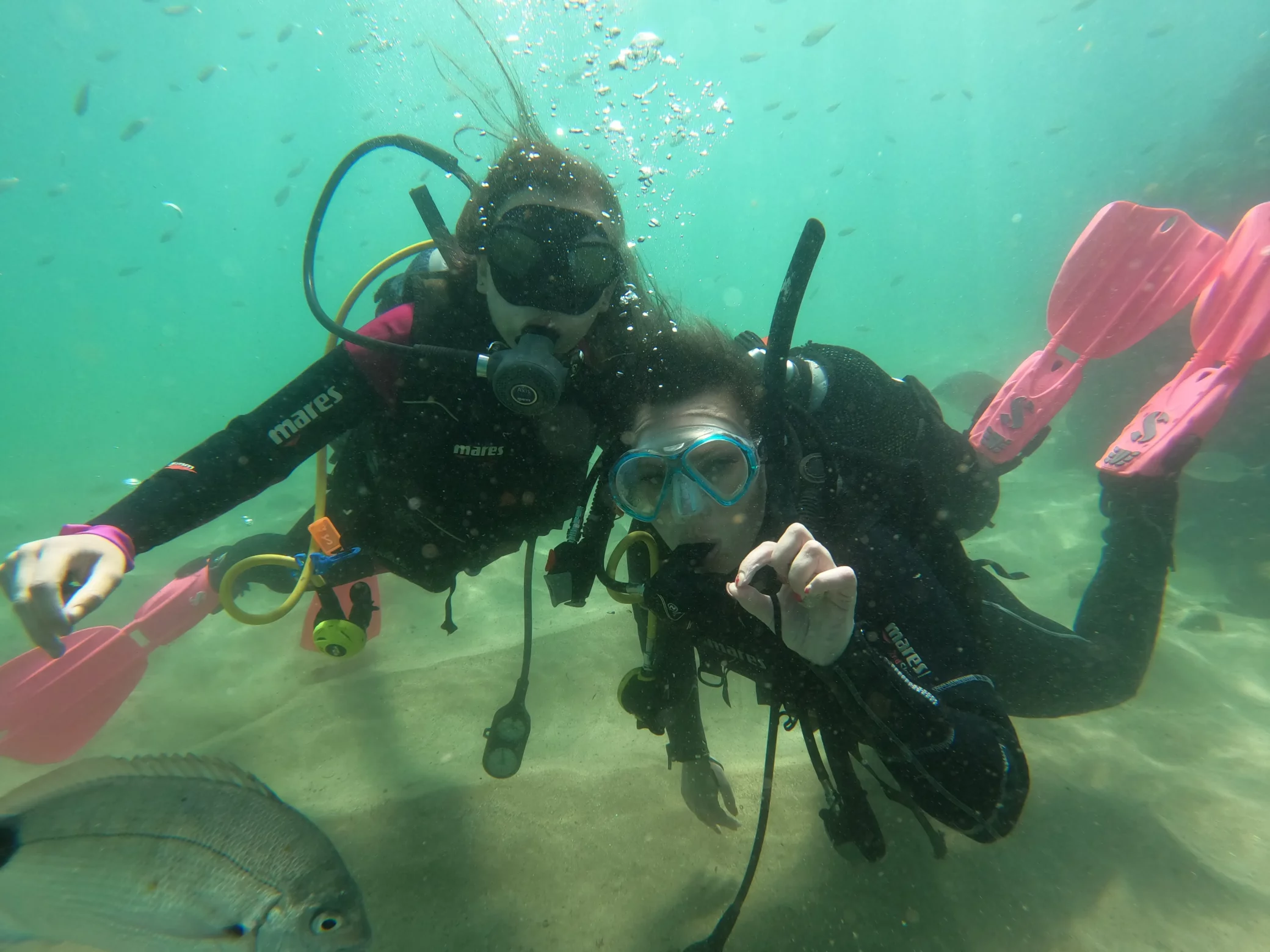
Growing up near the coast meant the sea was always there, but it wasn’t until I came to South Africa originally, in 2009, that I truly fell in love with it. Learning to scuba dive and seeing what exists beneath the surface completely changes your perspective. Today, that passion influences almost everything I do, from the conservation projects I lead to the clients I enjoy working with. Even my weekends usually involve the ocean in some way.
I love that I’ve been able to bring up my kids to also love the ocean and spend so much time involved in ocean activities. They’re both passionate advocates for marine life. My eldest daughter is sadly going through treatment for a relapse of leukaemia, and the thing she was most worried about wasn’t all the nasty medications; it was not being able to dive because she had to get a Hickman Line, meaning she can’t be submerged in water.
How does being a copywriter influence the way you see the world (or the way the world sees you)?
I’m constantly noticing stories that other people might overlook. Every business, person, place, and organism has a story. Sometimes it just needs to be uncovered. It also means I ask “why?” a lot. I know I’m very tenacious, and when I need to know something and find answers, I will dig very deep. So I suppose people see me a bit like a dog with a bone when I latch on to a story or project.
Did you ever think of becoming a published author? What kind of books could you see yourself writing?
Absolutely. Maybe one day I’d love to write non-fiction centred around sharks, conservation, and the relationship between people and nature. I’d also enjoy writing children’s books about marine life. Helping young people fall in love with the ocean is one of the best ways to protect its future. However, I have just never sat long enough to put pen to paper for that kind of long-form writing!
While spending a lot of time in the hospital with my daughter and having no weekend plans, except… being in the hospital… I am busy trying to put together a short kids’ book, with my daughters as the main characters. I’ve made them the heroes trying to save ocean life, and I am hoping to have it finished to give them at Christmas time. Maybe even beforehand.
Where would you say you get most of your creative inspiration from?
Nature, without question. The ocean is endlessly inspiring because it’s constantly changing. I also find inspiration in conversations with interesting people, travelling, photography, and reading. The best ideas often come when I’m nowhere near my desk.
If you could write copy for the ocean itself (as a brand), what would your headline be?
“I’ve always looked after you. It’s your turn now.”
How has your Scottish sense of humour helped you in the world of marketing and copywriting?
Scottish humour is wonderfully dry, self-aware, and often built around good storytelling. It reminds me not to take myself too seriously. Humour, when it’s used well, makes brands feel human, and people connect with people.
What’s one big dream project—writing-related or ocean-related—that you haven’t tackled yet?
I’d love to create a global storytelling campaign so powerful that it changes public behaviour and influences policy. I’m fascinated by the challenge of taking complex conservation issues and turning them into simple, emotional stories that stop people from scrolling, make them care, and inspire millions to take action.
Too often, conservation communication relies on facts alone, but people don’t protect what they don’t connect with. I want to create campaigns that make people feel something first… campaigns that spark conversations, shift perceptions, and motivate individuals, communities, and decision-makers to act.
The past few months, campaigning to find a stem cell donor for my daughter Alba, has only strengthened that belief. I’ve seen first-hand how the right story, told honestly and with heart, can unite strangers across the world, inspire people to act, and even save lives. It reinforced something I’ve always believed: storytelling isn’t just about raising awareness; it’s one of the most powerful tools we have to create meaningful change.
I’ve already developed concepts for campaigns, including one focused on establishing shark catch exclusion zones, that use bold, unexpected storytelling to cut through the noise. My dream is to have the time and resources to bring ideas like these to life and demonstrate just how powerful great storytelling can be in protecting our oceans.
In what ways has moving between cultures (Scotland and South Africa) sharpened your ability to understand different audiences through copy?
It’s taught me very quickly that great communication isn’t just about language, it’s about culture. Humour, emotion, values, and even the words people choose can mean completely different things depending on where they come from. It’s made me far more curious and empathetic as a communicator because I’ve learned to listen before I write.
That perspective has been invaluable in my work. Whether I’m writing for a tourism campaign, an international conservation audience or a local brand, I always ask myself who I’m really speaking to and what matters to them. The goal isn’t simply to translate a message. It’s to make people feel like it was written for them. I think living between cultures has made me a better storyteller because it’s taught me that the best copy starts with understanding people, not products.
What is your favourite water activity/sport and why?
If I had to choose just one, I’d say scuba diving, but honestly, I love being in or on the water in almost any way. Whether I’m diving beneath the surface, heading out on a boat at sunrise, or simply spending time on the ocean, it’s where I feel most at home.
Scuba diving is especially magical because it’s one of the few places where the world goes completely quiet. The moment you descend below the surface, everything else fades away, and you’re reminded that you’re a visitor in another world. Every dive is different, whether it’s a curious seal, a shy octopus, or the unmistakable thrill of encountering a shark.
Spending so much time on and under the ocean has shaped who I am. It’s inspired my work as a conservation storyteller, introduced me to lifelong friends, and given me a deep respect for marine life. The more time I spend in the ocean, the more determined I become to protect it. Whether I’m diving, out on a boat, or simply watching the sea, I’m constantly reminded why these wild places are worth fighting for.
What would you say you appreciate most about working in the office at Grindstone?
The people, without a doubt. We have a genuinely collaborative culture where ideas are encouraged, and we’re all from different backgrounds, so we approach challenges in different ways. As someone who loves storytelling and creative problem-solving, being surrounded by people with varied skills and perspectives makes every project stronger.
I’ve really come to appreciate that over the past few months. Much of my work has been from home while caring for my daughter, or from a hospital room during her treatment, so I genuinely miss the energy of the office. There’s something special about the spontaneous moments you can’t schedule, like a passing conversation that sparks a new campaign idea, someone offering a fresh perspective that unlocks a problem, or simply sharing a laugh over a coffee.
Grindstone has given me the opportunity to work across everything from tourism and destination marketing to conservation campaigns and purpose-driven communications, and throughout this challenging time the team has been incredibly supportive. Having colleagues who believe in ambitious ideas, trust one another, and genuinely care about each other makes all the difference. It’s an environment where curiosity is encouraged, creativity is celebrated, and people truly want each other to succeed.