You joined Grindstone in April. What were your first impressions of the agency, and what surprised you most about the way we work?
I was surprised by the amount of support there was and how healthy the work environment is. It is not something you come across very often these days.
You had to hit the ground running pretty quickly. What have the first few months at Grindstone taught you about project management that you couldn’t have learned from a textbook?
The amount of client liaison and interaction is definitely more than I expected, but I love working with and getting to know all the lovely clients we work with. Outside of that, I don’t think the textbooks prepare you for the amount of adaptability you need to have. If something goes sideways, you should always have a plan B, C, all the way through to Z. Luckily, I have always been a planner, and one of the sayings I live by is to prepare for the worst and hope for the best. Thus, always having a backup for my backup.
Project management is often about keeping a lot of moving parts together. What do you enjoy most about that side of the job?
So, side note, I have a pretty bad level of ADHD, which is pretty funny, because you would think I get sidetracked quite a lot, which I sometimes do. However, this is a super tool for me to be able to juggle multiple things at the same time and still be super calm and collected. So, in essence, I love staying busy, and all the moving parts help stimulate my busy brain. This is definitely one of the big reasons I love project management.
What’s been the biggest learning curve for you since joining Grindstone, and what are you feeling much more confident about now?
Definitely getting used to an agency environment and 8 to 5 hours, especially coming from flexi hours and freelancing. I am much more confident about communication and how to convey a message through words, the same way I perceive it. I am not someone who is always good with words.
You’ve had to step into client liaison earlier than expected. What have you learned about communicating with clients, particularly when there are lots of people, deadlines, and moving parts involved?
Lots of people, lots of deadlines, and lots of moving parts are definitely a good thing for my ADHD brain, as it keeps me stimulated. But what I have learned is how to communicate properly. I always struggle to convey a message, but I think I have learnt a lot.
What’s something about working in a creative agency that you didn’t expect before you joined us?
Growing up, I was very creative and very artistic, whether I was painting or drawing. In my early teens, when my grandmother passed away, it was something that I did not pursue or practice further, as she was one of the biggest driving factors for my art. After starting my position here, it seemed as if that passion and creativity spark reignited, and I would find myself designing and being creative in my off time.
You’ve been involved with Sea Rescue Mossel Bay since you were 15. What has kept you there for so many years?
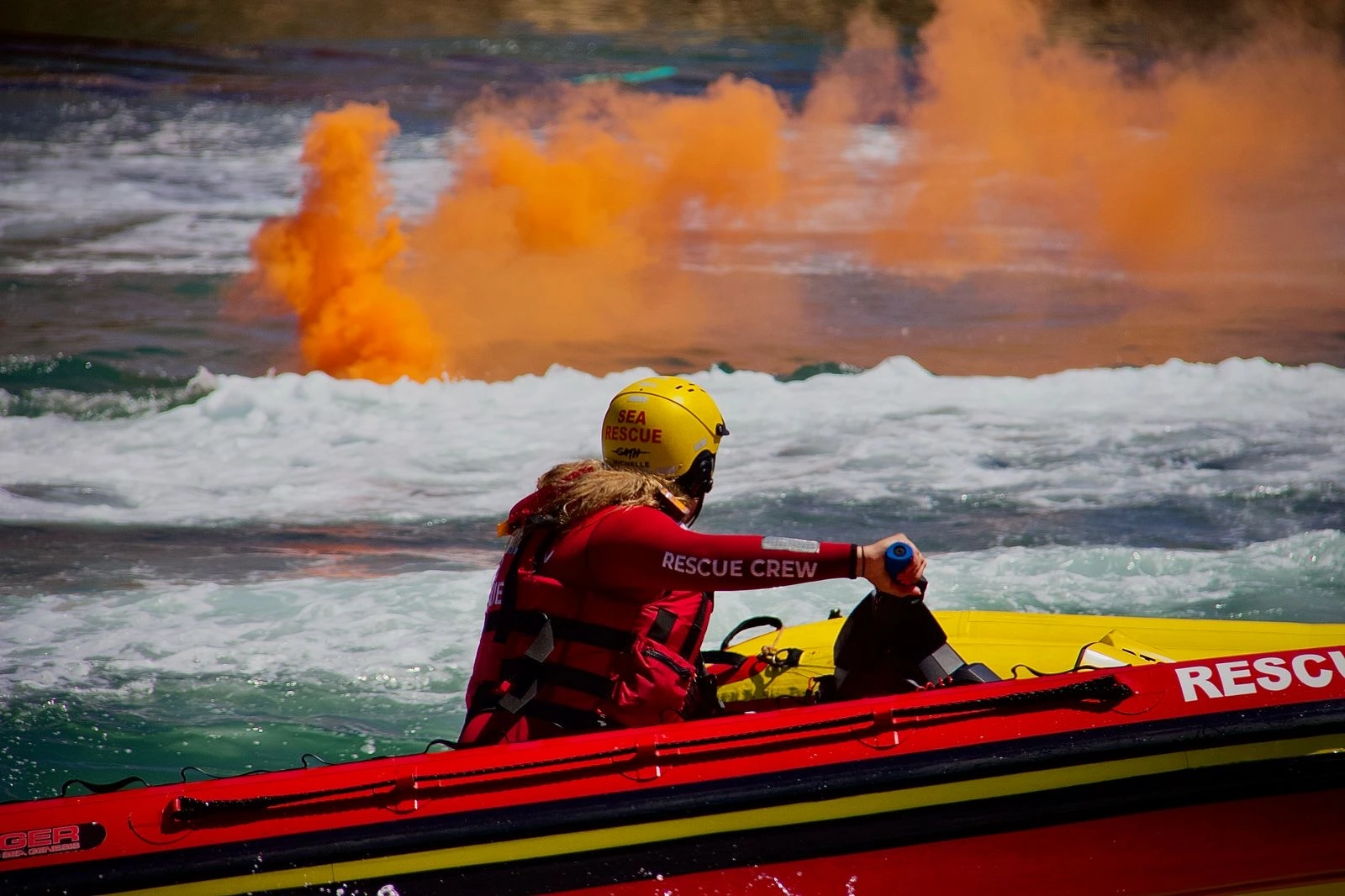
My exposure to the National Sea Rescue Institute goes way back. My dad joined in 2007, when I was only 5 years old. Growing up in the environment and around the station, I developed a passion for helping people and became an absolute thalassophile, which means an ocean lover for those who don’t know. So when I reached the bright young age of 15, I could finally ‘officially’ join as a junior crew member and start my Sea Rescue career. Now, 9 years later, I am a qualified Class 3 Rescue Coxswain and the first female in the history of Mossel Bay’s Station 15 to reach this qualification. Outside of this, I am qualified in a variety of specialised courses, ranging from Maritime Extrication Technician and Trainer (which is our high-angle and rope rescue – the only difference is we work with dynamic platforms instead of static ones) and Swiftwater Rescue, which is fast-flowing water like River rescue and Urban Flooding, all the way to Whale Disentanglement.
Why spend half of my time volunteering? Because nothing in this world measures up to being able to save a life. Being able to bring a mom her 3-year-old little girl who the ocean has swept in, or helping a dog cross a river, bringing back a mom or a dad to their kids, or being able to be part of an operation to provide 83 people with safe passage to be able to go home.
Now I am making my way as a Trainee Class 1 to become a Class 1 Rescue Coxswain. I will always be part of the NSRI and don’t picture my life without it. I would never give up the opportunity to save a life.
You’ve recently earned your Class 3 Coxswain qualification and taken on the role of Operations Coordinator. What does that responsibility mean to you?
I think the responsibility of every volunteer is equally important; the responsibility just becomes greater as you climb the career ladder within Sea Rescue. As a crew member, you are kind of just responsible for yourself. As a Class 4 Coxswain, you are responsible for yourself, one or two crew, and a small vessel just over 600kg. Now, as a Class 3 Coxswain, you operate day and night, in all possible sea conditions. You operate a rescue vessel of +- 2 tons with up to 8 crew on board. On top of that, you’re lining up the vessel alongside a cargo ship or cruise liner, keeping it dead steady for crew or casualties to transfer from one to the other.
As Rescue Crew & Operations Coordinator, I oversee the full operational support of our volunteer sea rescue crew at the station. This includes onboarding new members, managing crew records, medicals, clothing and certifications, crew performance, risk assessments, ensuring SOPs and safety standards are followed, handling communications and community requests, supporting crew welfare and recognition, and driving continuous improvement and succession planning so our station stays ready and our crew is well supported.
As a Class 3, you are in charge of rescue operations, and you are in charge of and responsible for the Class 4 and its crew as well. When everyone else is coming back from sea, your crew is trusting you to take them out and back again, safely. Having someone, let alone a group of people, entrust their whole life in your hands, in some of the worst conditions out there, is a big responsibility but the greatest honor.
With your dad having been a station commander and your mum involved in operations, Sea Rescue is quite literally a family affair. Has that influenced the way you approach responsibility and teamwork?
It had a big influence on even how I approach my professional life vs personal life. Working with family and friends can be extremely challenging, but working with both my parents and some close friends, especially in rescue and high-risk environments. You have to be able to separate your personal feelings from your professional judgement.
Especially as a coxswain, you have to make split-second decisions, sometimes with a life on the line. You can’t make these decisions efficiently if you let your feelings or emotions get in the way. So, in essence, working with my parents in a high-risk environment has taught me how to separate my personal life from business life, so when I mean business, it’s not personal, just business.
You’re also a qualified PADI Open Water Scuba Instructor. Is there anything you’ve learned underwater about staying calm, communicating, or assessing a situation that you find yourself bringing into your working life?
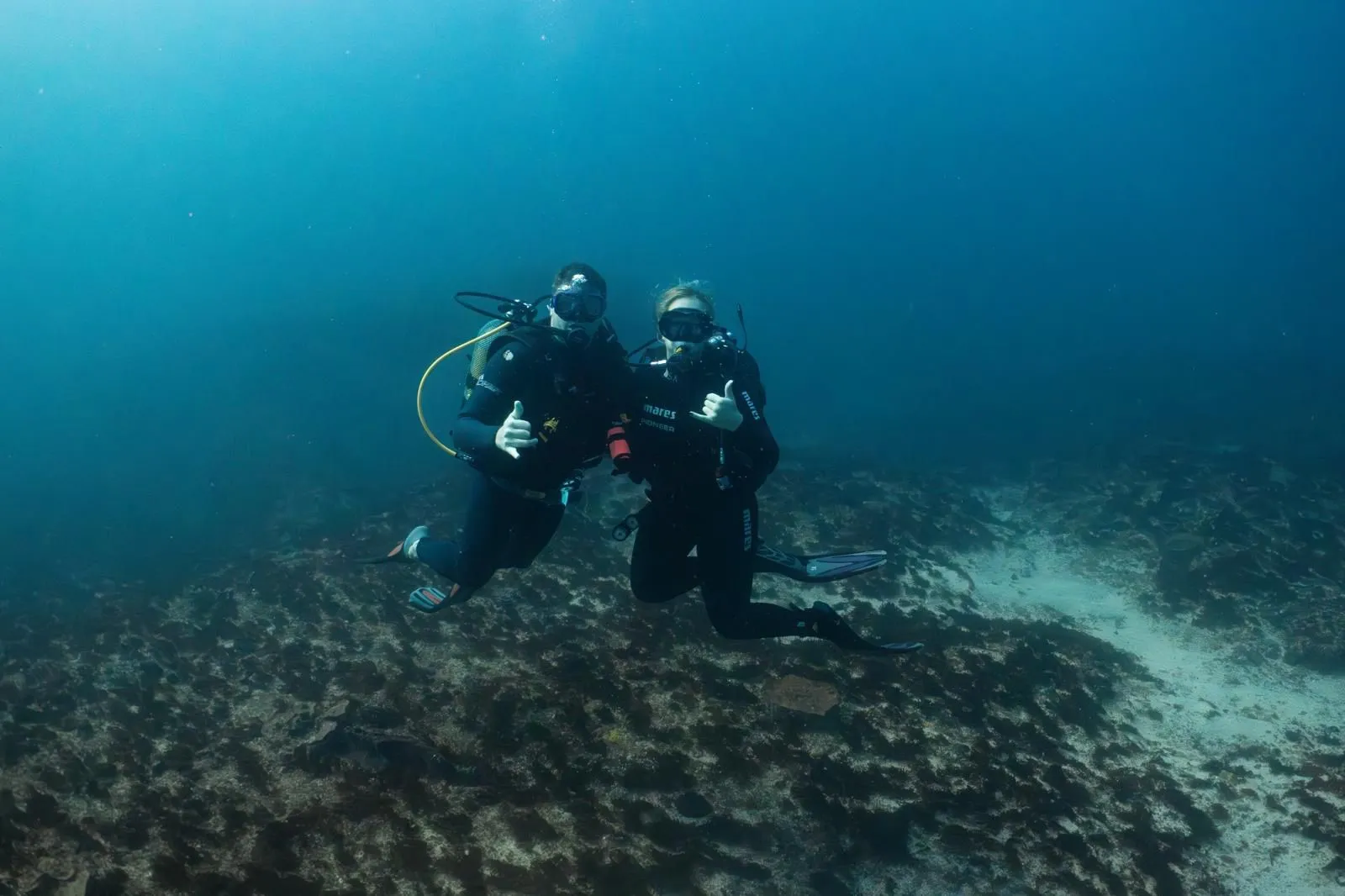
One thing is, you don’t need words to communicate. Underwater, you rely on hand signals to communicate; it is like a whole language on its own. Staying calm always and in all circumstances. When everyone’s running, I will be the one walking, always calm and collected. This trait, along with my ADHD, has made me especially attentive to people’s habits and patterns, making it super easy to read people’s behaviour, which is great when working with students, especially underwater. This all comes back to the fact that if they see you are calm and collected, it automatically makes them trust you in difficult situations.
Between project management, Sea Rescue, and diving, you’re probably quite comfortable with situations where things don’t go exactly according to plan. How do you handle a bit of chaos?
Controlled chaos almost perfectly describes most of my life. Always busy, always biting off more than I can chew, working full-time, studying again, while still volunteering at Sea Rescue, and being a part-time dive Instructor.
I never sit still, always busy with something, and I think I have learned to embrace the chaos. I feel most calm in chaos. The one place where I find utmost inner peace is on the helm of a boat in the surf, which is one of the most dangerous areas of operation in Sea Rescue, or breathing underwater at a depth of 40m, on the stunning coast of Mozambique. At 40m deep in our oceans or on a vessel with crew onboard, things can go wrong quite quickly, and sometimes you need to make a split decision and adapt.
Being in the surf is the same. It’s all about finding calm in the chaos and adapting while the waves pick up and rush towards you. You carefully calculate your next three moves because you always have to be four steps ahead in the surf. But with careful planning, you can idle a boat to the backline in some of the harshest conditions.
Same with being at 30 metres as a dive instructor, if a client’s equipment fails, you have to adapt and do so calmly. Whether it’s students or your crew on a rescue vessel, they look up to you and watch your every move, how you handle every challenge and change, and as soon as you panic, they panic.
It all comes down to staying calm and controlling the chaos.
What’s your favourite part of working with the Grindstone team?
My favourite part of working at Grindstone… hmm… there is not just one, but one thing that really stands out is the love and compassion. There are so many people who forget to have grace and just be a good person. At Grindstone, you feel part of a great team and a healthy work environment.
You have got support every step of the way, no matter what goals or projects you pursue. I think more people should prioritise compassion and passion and just be reminded that there is space for all of us and to have grace for one another.
There is a popular saying that goes, ‘A salary increase makes you happy once a year, but a healthy culture keeps you happy every day.’ That is probably my favourite part of being part of the Grindstone Team. The fact that you actually have a team behind you.
If you could go back and give yourself one piece of advice on your first day at Grindstone, what would it be?
Trust yourself sooner and don’t be too hard on yourself. I think I spent too much time in the beginning worrying about whether I was doing things the ‘right’ way, when in reality, asking questions, taking initiative, learning as I go, and trusting the experience and knowledge I had was exactly what I needed to do. I’d remind myself that I didn’t need to have all the answers on day one — I just needed to be willing to learn, take ownership and give things a go. And also say yes to opportunities, even when you don’t feel completely ready. Some of the biggest things I’ve learned at Grindstone have come from being thrown into something new, figuring it out, and growing along the way.
What’s one thing you’re particularly proud of accomplishing since joining us?
Outside of my professional career, becoming the first female Class 3 Rescue Coxswain in the history of Station 15 Mossel Bay, and inside of my career at Grindstone, definitely finding ways to improvise and improve workflow and processes.
And finally, what’s something people might be surprised to learn about you?
In my career prior to project management, I was a personal trainer, and I am an advanced 500-hour yoga teacher. Whenever I travel abroad, as I frequently travel to Mozambique, and even with my travels to Australia, I always pack my yoga mat.